When a competitor quietly starts ranking on the first page for keywords your buyers are actively searching, your pipeline takes a hit before you even notice. By the time a prospect tells you they found your competitor through Google, that competitor has already shaped the narrative.
Tracking competitor SEO rankings is one of the most underrated forms of competitive intelligence. The data is public, the signals are clear, and most sales teams ignore it entirely.
Why Competitor SEO Movements Signal Strategic Intent
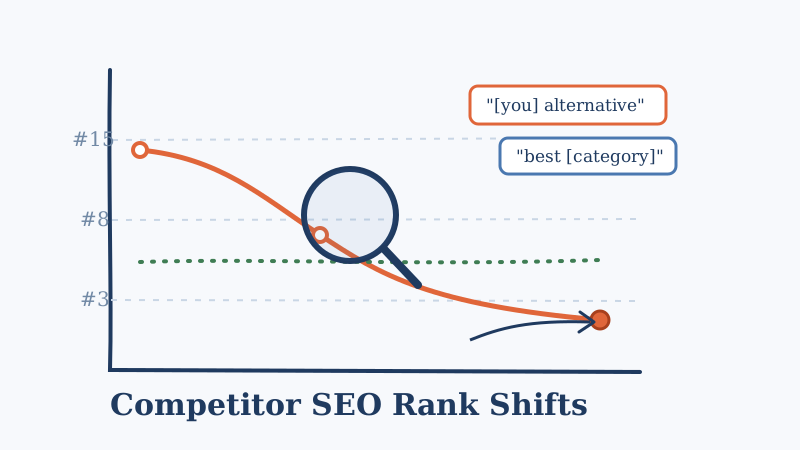
Organic search rankings are a lagging indicator of content investment. When a competitor climbs from position 15 to position 3 on a high-intent keyword, that did not happen overnight. It took months of content creation, link building, and technical optimization. Seeing the ranking movement is your first signal that they made a deliberate bet on that topic.
That bet tells you several things:
Which problems they think buyers are researching. If a competitor suddenly ranks for “best alternatives to [your category]” or “[use case] software for [industry]”, they have identified a buyer journey they were not covering before. That is the same buyer journey your reps are working.
Which customer segment they are targeting. Keywords carry intent signals. A competitor moving into informational “how-to” keywords around a topic you own suggests they are trying to intercept buyers earlier in the funnel. A competitor ranking for “[competitor name] vs [your name]” pages is directly poaching evaluation-stage prospects.
Where they expect future demand. Companies invest in SEO content around problems they expect to grow. A competitor publishing a cluster of content around a specific industry vertical or use case before it becomes crowded is telling you where they see the market moving.
When they are shifting positioning. If a competitor abandons a set of keywords they previously ranked for, they may be pivoting away from that use case or customer profile. That is an opening.
The Keywords That Matter Most for Sales Intelligence
Not every keyword a competitor ranks for is worth monitoring. Focus your attention on three categories.
High-intent commercial keywords. Searches like “[category] software”, “best [category] tools”, “[competitor name] pricing”, and “[competitor name] alternative” represent buyers who are close to a decision. When a competitor climbs rankings on these, they are intercepting late-stage buyers.
Your own brand and comparison terms. If a competitor is ranking on “[your company name] vs [competitor name]” or “[your company name] alternative”, they have built content specifically designed to pull buyers away from you at the moment of evaluation. This is aggressive and worth responding to directly.
Problem-aware and solution-aware keywords. Searches like “how to track competitor website changes” or “competitive intelligence for sales teams” represent buyers who understand their problem but have not chosen a solution. Competitors ranking here are shaping the category narrative before buyers form strong preferences.
Industry and persona-specific terms. When a competitor suddenly ranks for “[industry] competitive intelligence” or “competitive intelligence for [job title]”, they are making a targeted vertical or persona push. If that vertical is in your pipeline, the timing matters.
How to Track Competitor SEO Rankings
Most teams do not monitor competitor SEO at all, and those who do check rankings manually once a quarter. That cadence is too slow for the signal to be actionable.
Use keyword ranking tools with competitor tracking. Tools like Ahrefs, SEMrush, and Moz let you add competitor domains and track their rankings across keyword sets over time. Set up rank tracking for your core keyword clusters and add the top three to five competitors.
Monitor ranking changes, not just positions. A competitor at position 4 is less interesting than a competitor who moved from position 20 to position 4 in 60 days. The velocity of the change tells you they made a deliberate push.
Watch for new content clusters appearing. When a competitor publishes five or ten pieces of content around a topic cluster in a short window, they are building topical authority. The individual rankings may start low, but the cluster approach will compound over months. Catching this early gives you time to respond.
Alert on brand and comparison keyword movements. Any time a competitor gains or loses significant ranking on a term that includes your company name or a direct comparison, that should trigger an immediate response from your content or marketing team.
Connect SEO movements to other signals. A competitor hiring three SEO content writers while simultaneously publishing a new content cluster and ranking for your high-intent keywords is a much stronger signal than any one data point alone. CAM lets you monitor multiple competitor signals in one place, so you can correlate website changes, hiring patterns, and content movements without jumping between a dozen different tools.
Turning SEO Data Into Sales Conversations
Competitive intelligence only creates value if it reaches the people who can act on it. SEO data has specific applications in the sales conversation.
Objection prep. If a competitor is ranking for content that makes claims about your product category, your reps are going to hear those claims from prospects. Pull the ranking content, understand the narrative, and build a response your reps can use before the objection surfaces.
Prospect targeting. Buyers who are searching the keywords a competitor is targeting are the same buyers in your pipeline. If a competitor builds a content cluster around a specific industry vertical, that cluster is driving awareness among the exact companies you want to sell to. Knowing which verticals a competitor is investing in helps you prioritize your own outreach.
Timing competitive plays. A competitor who just published a major content cluster and is climbing rankings fast is about to have a moment of increased visibility. If you have prospects in that segment who are evaluating, speed up the cycle. If you have accounts who renewed recently, get a check-in on the calendar before those prospects see the competitor content.
Win-loss context. When you lose a deal and the prospect says they found the competitor through their research, understanding which content ranked and what it said helps you build better competitive positioning. The ranking is not just an SEO metric. It is evidence of what narrative won the deal.
What SEO Movements Predict
Competitor SEO strategy changes are a leading indicator of positioning shifts that will take longer to show up in other channels. A competitor who invests heavily in SEO content around a new use case is signaling a positioning shift three to six months before it shows up in their website homepage, their sales deck, or their G2 profile.
That lead time is the opportunity. By the time a competitor is running ads against a keyword cluster, you have had six months of warning from their organic content investment.
CAM automates this monitoring so your team gets alerts when competitor rankings move, not summaries of what happened last quarter. The sales intelligence value of SEO data is entirely dependent on timing. A ranking change you discover on Monday can inform a conversation on Tuesday. A ranking change you discover in a monthly report informs nothing.
Putting It Together
Competitor SEO monitoring is not a marketing activity. It is a sales intelligence function that tells you where competitors are investing, which buyers they are targeting, and what narrative they are building. The ranking data is public and the signals are clear.
The teams who use this data consistently are the ones who never get surprised when a prospect brings up a competitor they had not heard of. They saw the content cluster six months ago and they were ready.
Set up rank tracking for your top five competitors today. Alert on movement in your core keyword clusters. Connect the SEO signals to your other competitive monitoring so you can see the full picture. The data is there. The teams who act on it win more deals.