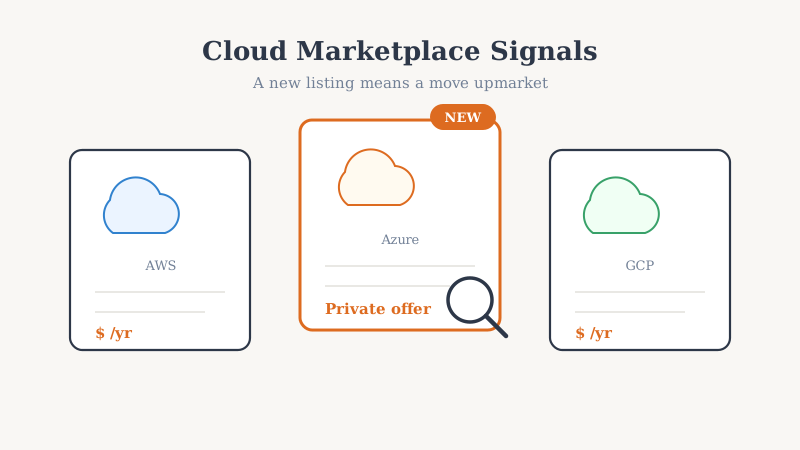
Most competitive intelligence programs watch the obvious surfaces: the pricing page, the changelog, the hiring board. A quieter surface says just as much about where a competitor is headed, and almost nobody monitors it. When a company publishes a listing on the AWS Marketplace, the Azure Marketplace, or the Google Cloud Marketplace, they are not just adding a distribution channel. They are telling you they have decided to sell into enterprise procurement, and they have built the billing, security, and contract infrastructure to do it.
That single listing is one of the clearest upmarket signals a B2B software company gives off, and it usually appears months before the competitor talks about it publicly. The problem is that these marketplaces are sprawling, they change quietly, and nobody on your team is checking them the day a new listing goes live.
Why a Cloud Marketplace Listing Is a Strategic Signal
Getting a product listed on a hyperscaler marketplace is not a marketing checkbox. It is a deliberate, expensive commitment that reveals intent.
It signals a move upmarket. Enterprises increasingly buy software through their cloud provider because the spend counts toward committed cloud consumption agreements. A competitor that lists on AWS Marketplace is chasing buyers who have six or seven figure AWS commitments to burn down. If they were content selling to SMB through a credit card checkout, they would not bother.
It implies procurement readiness. To transact on a marketplace, a vendor needs standardized contracts, metered or seat based billing that the platform understands, and usually a security posture that survives enterprise review. Seeing the listing tells you the competitor has quietly built all of that, even if their public website still looks like a self serve product.
It reveals packaging and price. Marketplace listings frequently expose private offer structures, annual commitment tiers, and per unit pricing that the competitor does not publish on their own site. That is pricing intelligence you cannot get anywhere else, sitting in plain sight.
It maps their partner strategy. Which clouds they list on tells you which ecosystems they are betting on. An Azure only listing suggests a Microsoft heavy customer base. Listing across all three hyperscalers signals a serious, well funded enterprise push.
What to Watch For on Each Marketplace
Not every change on a marketplace listing matters. Focus your monitoring on the handful of signals that translate into a real strategic read.
A brand new listing. The first appearance of a competitor on any marketplace is the headline event. It is the moment their enterprise intent becomes visible, and it is your cue to prepare positioning before their sales team starts quoting marketplace deals in your active opportunities.
New private offer or contract options. When a listing adds custom contract terms, annual commitments, or a “contact for private pricing” path, the competitor is formalizing enterprise sales motions. That often precedes a public move upmarket by a quarter or more.
Pricing and tier changes. Marketplace pricing updates are dated and public in a way the competitor’s own pricing page changes are not. A jump in listed price or a new premium tier tells you how they are repositioning value.
Expansion to additional clouds. A competitor moving from one marketplace to two or three is scaling their enterprise distribution. That velocity is a signal worth escalating on its own.
Category and metadata shifts. How a competitor categorizes and describes their listing reveals which buyer they are chasing. A shift in the listing title, categories, or feature bullets is a repositioning signal hiding in the metadata.
The Problem With Checking Manually
You could bookmark a few marketplace URLs and check them once a quarter. In practice that fails for three reasons.
The marketplaces are large and the search is noisy, so finding a specific competitor’s listing and its exact state is tedious. The pages change constantly with re-sorted reviews, rotating badges, and timestamp updates that have nothing to do with strategy, so a raw diff drowns you in false positives. And the signal is time sensitive: a new listing is most valuable in the weeks right after it appears, when you can adjust positioning before it shows up in a live deal. A quarterly manual check misses that window every time.
This is exactly the kind of recurring, change based monitoring that should be automated. Instead of remembering to look, you set up a watch once and get told only when something real changes.
How to Automate Marketplace Monitoring
The reliable approach is to point a monitoring tool at each competitor’s marketplace listing and let a change judge decide what is worth surfacing. CAM is built for exactly this pattern: you give it the URLs you care about, and it watches them continuously so your team does not have to.
Track the listing pages directly. Add each competitor’s AWS, Azure, and GCP listing URL as a monitored page. The moment the listing appears, changes price, or adds a contract option, you get an alert instead of discovering it two quarters late.
Watch the marketplace category pages. Monitoring the category or search results page for your space catches brand new competitor listings you did not know to look for, not just changes to vendors you already track.
Filter out the noise. The reason manual diffing fails is that marketplace pages churn with cosmetic updates. CAM runs changes through a judge that ignores formatting shifts, re-sorted reviews, and timestamp noise, so the alerts you get reflect an actual pricing or packaging move. You can read more about how CAM filters noise and routes only meaningful changes on the product site. That is the difference between a monitor your team trusts and one they mute after the third false alarm.
Route alerts to the right people. A new private offer tier is pricing intelligence for your revenue team. A new listing is positioning intelligence for product marketing. Send each signal to the people who can act on it.
Turning a Marketplace Signal Into Action
An alert only matters if it changes what someone does. When a competitor’s marketplace listing moves, run it through a quick read.
A new listing means prepare positioning now. If a competitor just went live on AWS Marketplace, your enterprise reps will start hearing about marketplace billing in deals. Brief them on the tradeoffs, the lock in, and where your commercial model is stronger before the objection lands cold.
A private offer path means they are selling enterprise deals. Update your battlecard to reflect that the competitor now closes committed annual contracts, and coach reps on how to compete on flexibility and total cost rather than sticker price.
Cross cloud expansion means a funded push. When a competitor scales to a second or third marketplace, treat it as evidence of an enterprise motion with real investment behind it. Pair it with their hiring signals and funding news to size the threat accurately.
Feed pricing back to your own strategy. Marketplace listings often expose commitment tiers and per unit economics the competitor hides elsewhere. That is direct input for your own packaging and discount guardrails.
The Compounding View
A single marketplace listing is a data point. A tracked history of a competitor’s listings across the three hyperscalers is a strategic asset. Over time you see when they entered enterprise, how their packaging evolved, which clouds they doubled down on, and how their pricing crept up as they moved upmarket.
Pair that view with the other signals your team already watches, like pricing page changes, changelog updates, and hiring patterns, and scattered observations become a real intelligence program. Marketplace listings tell you where a competitor has decided to sell; the other signals tell you how fast they are getting there. Continuous, automated monitoring across those surfaces is the standard CAM is built for, surfacing only the meaningful changes to the people who can act on them.