
Monitor Competitor Google Ads and Paid Search Keywords to Read Their Demand-Gen Playbook
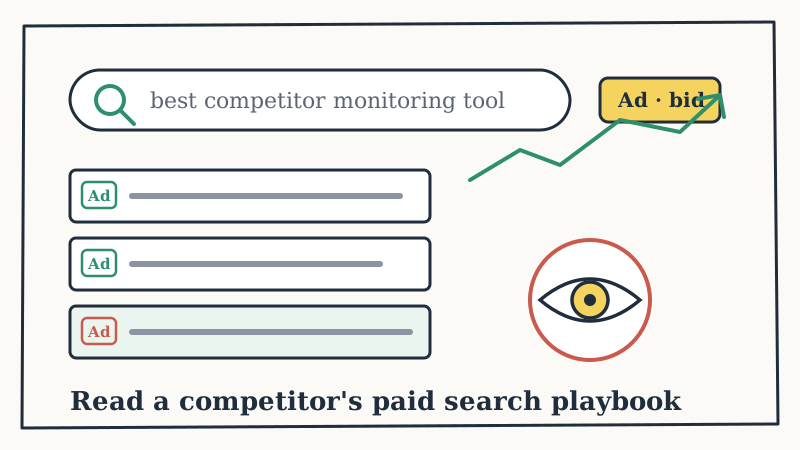
Every competitor tells you exactly what they are betting on, and they pay Google to broadcast it. Paid search is the one channel where a company puts real money behind a specific belief about what a buyer will type when they are ready to spend. The keywords they bid on, the ads they run against those keywords, and the pages those ads point to are a live, unedited statement of strategy.
Organic content is where a competitor says what they want to be known for. Paid search is where they show what they think will convert this quarter. That gap is the intelligence. And unlike a lot of competitive signals, this one has a hard dollar behind it, which makes it far harder to fake than a blog post or a press release.
Most teams check a competitor’s ads once, screenshot them, and move on. The signal is not the snapshot. It is the change over time.
Why paid search is the most honest competitive signal you have
A company can publish a vision blog with no budget attached. It can announce a partnership that goes nowhere. It can put a feature on a roadmap page and never ship it. None of that costs anything, so none of it is trustworthy on its own.
A Google Ads campaign is different. Someone had to approve a budget, pick keywords, write copy, build a landing page, and defend the spend against a cost-per-click number every week. When a competitor starts bidding on a new set of terms, a person with a quota decided those terms were worth paying for. That is a decision made with money on the line, which is the only kind of decision worth trusting.
This is also a leading indicator. A competitor bids on a keyword cluster before the leads arrive, before the case studies exist, sometimes before the feature is fully built. If you are watching their paid search, you are reading the demand-gen plan at the moment of the bet instead of six months later when their reps show up in your deals. Pairing that with the buying signals covered in competitor signals in early sales cycles gives you a picture of both what they are chasing and who is already in market.
What each paid-search change actually tells you
Paid search is a bundle of moving parts, and each one signals something different. Watching them together is what turns a screenshot into a read on strategy.
- New keyword clusters. When a competitor starts bidding on terms they ignored before, they are entering a new demand pool. A monitoring vendor suddenly bidding on “vendor risk” or “compliance alerts” is telling you they are chasing a new use case or vertical. The keywords name the market before the marketing site does.
- Bidding on your brand name. If a competitor starts buying ads against your company name, that is a direct declaration of war on your bottom-of-funnel traffic. It usually means they have decided you are the incumbent to displace, and it is costing you your own qualified clicks until you respond.
- Ad copy and offers. The headline and description are the positioning they are testing with real money. A new “free migration,” “no credit card,” or “switch in a day” offer tells you what objection they think is blocking their pipeline. When the offer changes, the objection changed.
- Landing page destination. Where the ad points matters as much as the keyword. A shift from a generic homepage to a dedicated comparison or vertical landing page means the campaign got serious and someone built infrastructure to convert it.
- Ad volume and consistency. A competitor running the same ads against the same terms for months has found something that works. A sudden burst of new ads is an experiment. A campaign that appears and vanishes was a test that failed, which is useful to know before you copy it.
The interpretation is the whole game. One new ad is noise. A new keyword cluster, a new offer, and a fresh landing page in the same two weeks is a funded campaign you can plan against.
Where to actually see a competitor’s paid search
You do not need access to a competitor’s ad account to read most of this. The data is public or semi-public if you know where to look.
- Google’s Ads Transparency Center shows the ads an advertiser is currently running, including variations and the regions they target. It is the cleanest first-party source for what creative is live right now.
- Running the searches yourself is underrated. Type the keywords your buyers use and see who shows up in the sponsored slots, what their copy says, and where they land you. Do this from a clean browser session so your own history does not skew results.
- Paid keyword tools such as SEMrush, Ahrefs, or SpyFu estimate the terms a domain bids on and roughly what it spends. Treat the exact numbers as directional, but the list of keywords and the trend over time are genuinely useful.
- Landing page URLs captured from live ads tell you which pages the competitor is investing in. Watching those specific URLs for changes catches offer and positioning shifts the moment they happen.
The hard part is not finding the data once. It is noticing when it changes, because paid search shifts quietly and there is no announcement when a competitor adds a keyword or swaps an offer.
Turn it into a system, not a one-time audit
A manual audit tells you what a competitor was doing the afternoon you looked. By the time you check again, a campaign has come and gone. The point of competitive intelligence is to catch the change on the day it happens, which means monitoring the underlying pages continuously instead of remembering to look.
This is exactly the job CAM is built for. Point it at a competitor’s key landing pages, their transparency center listing, and the comparison URLs their ads send traffic to, and it watches for changes automatically. When a competitor launches a new landing page for a keyword cluster or rewrites the offer on an existing one, you get an alert instead of finding out a quarter later. The same continuous-monitoring approach that teams use to track competitor pricing changes and adjust positioning in real time works just as well for the pages behind their paid search.
A practical setup looks like this:
- Build the target list. Identify the two or three competitors whose paid search overlaps yours, and collect their brand landing pages, comparison pages, and any vertical or use-case pages their ads point to.
- Monitor the pages that back the ads. Set continuous monitoring on those URLs so a new offer, a changed headline, or a fresh comparison page triggers a notification.
- Run a recurring keyword check. Once a week, run your core buyer keywords yourself and note who is bidding, what the copy says, and whether anything new appeared.
- Watch your own brand terms. Set an alert for competitors appearing in the sponsored results for your company name, since that is the most expensive attack to ignore.
- Route the signal to the people who act on it. A keyword or offer change should reach demand gen and sales, not sit in a spreadsheet. The teams who win with this feed it straight into campaign and battlecard decisions.
How to respond once you see the move
Detection only pays off if it changes what you do. A few responses map cleanly to what you will see.
If a competitor starts bidding on your brand name, decide whether to bid defensively on your own terms and make sure your landing page converts the traffic they are trying to poach. If they launch a new keyword cluster around a use case, ask whether that market is worth contesting and whether your own content and ads show up when a buyer searches it. If their ad copy leans on a new offer, test whether your sales team is hearing that same objection and update your battlecards before it costs you a deal. A monitoring habit that feeds win-loss analysis turns each of these observations into a documented pattern instead of a one-off reaction.
The competitors who are hardest to beat are the ones whose demand-gen plan you cannot see. Paid search removes that blind spot, because they are paying to show it to you. All you have to do is watch it consistently and read what the spending is telling you. Start monitoring the pages behind your competitors’ paid search and you will be reading their playbook while they still think it is private.
Ready to see competitor activity?
See which accounts your competitors are targeting on LinkedIn before you cold-call them.
Book a Walkthrough