
How to Monitor Competitor Free Trial and Freemium Changes to Spot PLG Strategy Shifts
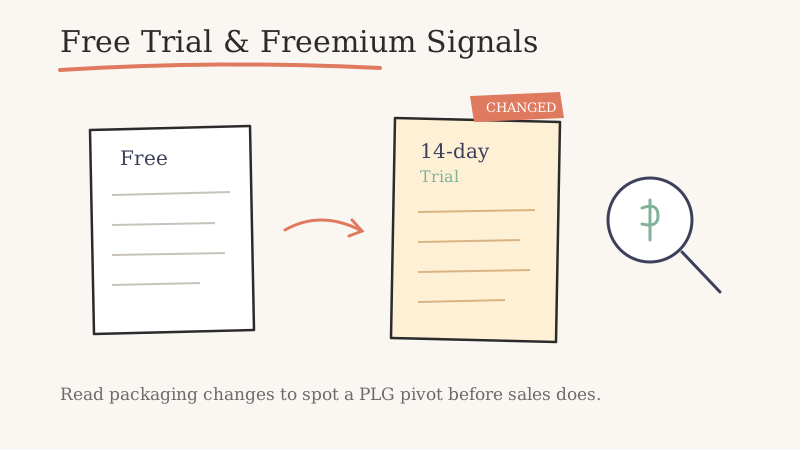
Most competitive intelligence teams watch the price. They set an alert on the number next to the “Pro” plan and feel covered. But the price is the last thing a competitor changes, and often the least revealing. The real story is in the packaging around it: whether there is a free plan, how long the trial runs, whether a credit card is required, and where the limits sit that push someone to upgrade.
That layer is where product-led growth lives. When a competitor swaps a free tier for a time-boxed trial, or drops the credit card requirement, or suddenly caps the free plan at one seat, they are re-tuning the exact machine that turns signups into revenue. Those changes ship quietly, weeks before any blog post or launch, and almost nobody is watching them.
This post covers what free trial and freemium changes actually signal, the specific things worth tracking, and how to monitor packaging shifts automatically instead of checking a pricing page by hand.
Why packaging changes matter more than price changes
A price change is a single lever. A packaging change is a strategy statement.
When a company runs a generous free plan, it is betting on volume: get as many people as possible using the product, then convert a small percentage. When it moves to a 14-day trial with a credit card up front, it is betting on intent: fewer signups, but each one is closer to a buying decision and easier for a sales team to work. The move between those two models is one of the biggest decisions a SaaS company makes, and it shows up on the pricing page long before it shows up in a press release.
So when you see a competitor change their trial or free tier, you are watching them answer a strategic question in public:
- Free plan removed, trial added usually means they are chasing revenue quality over signup volume, often under pressure from investors or a new revenue leader.
- Trial extended or credit card requirement dropped means they are lowering friction to grow top-of-funnel, often because activation or signup numbers stalled.
- Free tier limits tightened (fewer seats, lower usage caps) means they found their free plan was too generous and were leaving money on the table.
- A brand new free tier appears means they are moving toward a product-led motion, possibly to compete with a lower-priced entrant.
None of these are visible if you only track the headline price. All of them are visible if you track the packaging.
The specific signals worth watching
Here is what to monitor on a competitor’s pricing and signup pages, and what each shift tends to mean.
1. Free plan appears or disappears
The single highest-signal change. A free plan showing up for the first time is a clear move toward PLG and a bid for the bottom of the market. A free plan disappearing is a move upmarket, and often a sign the company is prioritizing average contract value over user count. Either way, it reshapes who they compete with, which means it reshapes who you compete with.
2. Trial length changes
A trial going from 30 days to 14, or 14 to 7, means they believe buyers can decide faster, or that longer trials were just delaying the sale. A trial getting longer usually means the product needs more time to show value, which is a subtle admission that time-to-value is a problem. Both are useful in a competitive deal.
3. Credit card requirement added or removed
Requiring a card up front filters out tire-kickers and lifts trial-to-paid conversion, at the cost of raw signups. Removing the card requirement does the opposite. Watching this flip tells you whether a competitor is optimizing for pipeline quality or pipeline quantity this quarter.
4. Seat and usage limits on the free or entry tier
The quiet lever. A free plan that drops from five seats to one, or an API limit that gets cut in half, is a targeted push to force upgrades sooner. These changes rarely get announced, and they are often the first sign a competitor is under pressure to improve monetization.
5. “Contact sales” replacing self-serve
When a competitor removes the ability to buy a tier online and replaces it with “contact sales,” they are moving that segment into a sales-assisted motion. That is a strong signal they are chasing larger deals, and it opens a real opportunity for you to win the self-serve buyers they just made wait for a sales call.
6. New plan names and tier restructuring
A rename from “Starter, Pro, Enterprise” to “Free, Team, Business, Enterprise” is not cosmetic. Adding a tier usually means they found a segment they were under-serving. Collapsing tiers means they were confusing buyers. The structure of the ladder tells you how they think about their market.
Turning these signals into action
Detecting the change is step one. The value comes from what your team does with it.
For sales, a competitor removing their free plan is a gift. Anyone who was happily using that free tier is now facing a bill, and that is the moment to reach out. Pair the packaging signal with the deal context and you have a timely, specific reason to start a conversation. This works best when your outreach lands while the frustration is fresh, so speed matters. Teams that book demos on the back of these signals often lean on calendar-based outreach tools like Kali to get a meeting on the books before the competitor’s own win-back campaign kicks in.
For product and pricing, competitor packaging moves are a live experiment you get to watch for free. If two competitors independently add a credit-card-required trial within a quarter, that is a market signal worth taking seriously before you redesign your own funnel.
For marketing, a competitor going upmarket leaves the low end exposed. That is the moment to double down on self-serve messaging and capture the buyers who no longer fit their model.
The common thread: these are time-sensitive signals. A packaging change is only an advantage if you catch it in days, not when you happen to revisit their pricing page a month later.
How to monitor packaging changes automatically
Checking a competitor’s pricing and signup pages by hand does not scale past one or two competitors, and it guarantees you miss the quiet changes: a seat limit dropping, a credit card field appearing on the signup form, a trial length edited from 30 to 14. Those edits do not send a newsletter. You only see them if something is watching the page continuously.
That is the job CAM is built for. Point it at a competitor’s pricing page and signup flow, and it watches for changes on your schedule, then alerts you when the packaging actually shifts. Because it compares the real content of the page over time, it catches the seat-limit edit and the “contact sales” swap that a person skimming the page would miss. You define the pages once, and the monitoring runs quietly in the background across every competitor you care about.
A practical setup looks like this:
- Track the main pricing page for tier structure, plan names, and any free-versus-trial change.
- Track the signup or “start free” page separately, since the credit card requirement and trial length often live there, not on the pricing page.
- Track the enterprise or “contact sales” page to catch tiers moving from self-serve to sales-assisted.
Set these once per competitor and you get an alert the moment any of them change, instead of finding out when a prospect mentions it on a call.
Packaging is where free trial and freemium strategy actually plays out, and it changes far more often than the headline price. Watch it deliberately, and you will read a competitor’s growth strategy weeks before they announce it. If you want to go one level deeper, pair this with tracking their pricing changes so you see both the number and the packaging move together. Stop checking pricing pages by hand and let the monitoring catch the quiet edits for you.
Ready to see competitor activity?
See which accounts your competitors are targeting on LinkedIn before you cold-call them.
Book a Walkthrough