
How to Monitor Competitor Customer Reviews and Turn Their Churn Into Your Pipeline
How to Monitor Competitor Customer Reviews and Turn Their Churn Into Your Pipeline
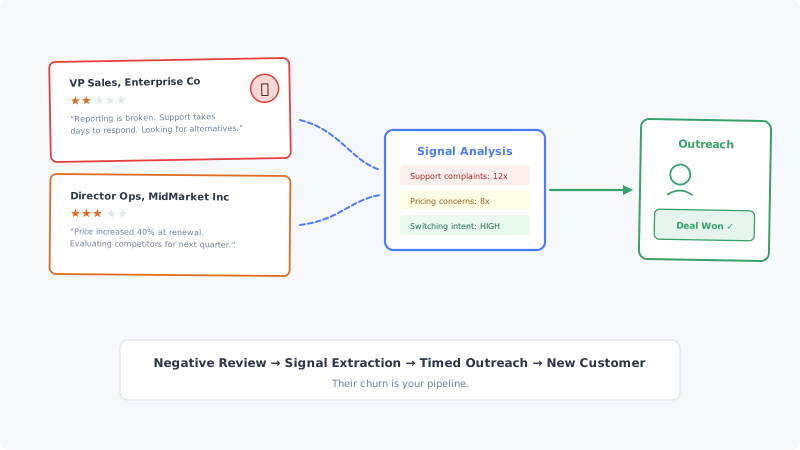
Every negative review a competitor receives is a signal. Not just that someone is unhappy, but that someone with budget, a defined need, and buying authority is actively reconsidering their options. That is a prospect.
Most sales teams treat competitor reviews as market research. They read a few G2 reviews during competitive positioning exercises, note some common complaints, and move on. That approach leaves pipeline on the table.
The teams that systematically monitor competitor customer reviews, extract intent signals from complaint patterns, and time their outreach to match moments of maximum frustration are building a competitive advantage that compounds with every review cycle.
Why Competitor Reviews Are High-Intent Signals
A customer who writes a negative review about a competitor’s product has crossed several thresholds that make them a significantly better prospect than a cold outbound target.
They have confirmed budget. They are currently paying for a solution in your category. You do not need to convince them that the problem is worth solving or that software is the right approach. The budget line item already exists.
They have implementation experience. They have been through the buying process, the onboarding, and the daily usage of a competing product. They know what matters to their organization, what worked, and what failed. Discovery calls with these prospects are faster and more productive because they arrive with context.
They are emotionally activated. Writing a public review takes effort. A customer who takes 15 minutes to write a detailed complaint on G2, Capterra, or TrustRadius is not mildly inconvenienced. They are frustrated enough to invest time in warning others. That frustration is a buying trigger.
Their contract is vulnerable. Negative reviews often appear during or just after renewal conversations. A customer evaluating whether to renew is more likely to document their complaints publicly, either as a decision-making exercise or as leverage in a renegotiation. Either way, the timing aligns with an active purchasing window.
What to Monitor and Where
Competitor reviews live across multiple platforms, and each one reveals different types of signals.
G2 and Capterra are the richest sources for B2B software reviews. They include structured ratings (ease of use, support quality, value for money), free-text pros and cons, and verified reviewer details like company size and industry. Monitor these weekly for your top three to five competitors.
TrustRadius reviews tend to be more detailed and technical. Reviewers often describe specific workflows and integration challenges. These reviews are particularly useful for identifying product gaps that your solution fills.
App marketplace reviews (Salesforce AppExchange, HubSpot Marketplace, Shopify App Store) capture complaints from users within specific ecosystems. These reviewers are often technical users or admins, and their complaints tend to be actionable and specific.
Reddit and community forums surface unfiltered opinions. Subreddits for specific industries or tools often have threads asking “anyone else having issues with [competitor]?” These threads reveal whether complaints are isolated incidents or widespread patterns.
Social media mentions (LinkedIn posts, Twitter/X threads) capture real-time frustration. A VP of Sales posting about their CRM’s latest outage or a marketing director complaining about reporting limitations is a signal with a name, title, and company attached.
Setting Up a Monitoring System
Manual review checking does not scale. You need a systematic approach that surfaces new signals without requiring daily effort.
Automated alerts. Set up Google Alerts for “[competitor name] review,” “[competitor name] alternative,” and “[competitor name] problems.” These catch blog posts, forum discussions, and news articles that reference competitor issues.
Review platform monitoring. Use CAM to track competitor review profiles and get notified when new reviews appear, when overall ratings change, or when review sentiment shifts. This eliminates the need to manually check each platform weekly.
Keyword tracking. Monitor search trends for “[competitor] alternative,” “[competitor] vs,” and “switching from [competitor].” Rising search volume for these terms indicates growing dissatisfaction across the competitor’s customer base, not just individual reviewers.
LinkedIn listening. Follow competitor company pages, key competitor employees, and their customer-facing teams. When a competitor’s customer success team is hiring aggressively, it often signals retention problems. When their product team posts damage-control content (“exciting updates coming in Q3”), read between the lines.
Extracting Actionable Intelligence From Reviews
Not every negative review is a sales opportunity. The skill is in identifying which complaints align with your strengths and represent genuine switching intent.
Pattern recognition over individual reviews. A single complaint about slow customer support could be an anomaly. Ten complaints about slow customer support in the last quarter is a systemic issue. Track complaint frequency by category: support responsiveness, product reliability, pricing transparency, feature gaps, integration problems, and UX friction.
Severity assessment. “The dashboard could be prettier” is a cosmetic complaint. “We lost three hours of data during their last outage” is a business-critical failure. Prioritize reviews that describe revenue impact, operational disruption, or compliance risk. These are the complaints that drive switching decisions.
Role and company analysis. A review from an individual contributor carries less switching signal than one from a VP or director. Decision-makers writing negative reviews are actively considering their options. Similarly, reviews from companies in your ideal customer profile (ICP) matter more than those outside your target market.
Timing signals. Reviews posted in September through November often coincide with annual budget planning and contract renewal cycles. A negative review posted two months before a typical renewal date is a prospect in active evaluation mode.
Competitive gap mapping. Build a matrix of competitor weaknesses (from reviews) mapped against your product’s strengths. When a reviewer complains about exactly the problem your product solves, that is a warm lead, not a cold one.
Turning Review Intelligence Into Outreach
Once you identify high-intent signals from competitor reviews, the outreach needs to be timely, relevant, and respectful. You are approaching someone who just publicly expressed frustration. Done well, this feels helpful. Done poorly, it feels predatory.
Do not reference the review directly in cold outreach. Saying “I saw your negative review of [competitor] on G2” feels invasive. Instead, reference the problem generally: “I work with several teams who have been dealing with [specific problem mentioned in review]. We built [your product] specifically to address that.”
Lead with empathy, not with selling. The prospect is frustrated. Acknowledge the difficulty of their situation before pitching your solution. “Switching tools mid-year is never convenient, but the cost of staying with something that is not working is usually higher.”
Offer a specific comparison or migration path. The prospect’s biggest concern about switching is the disruption of migration. Address it upfront: “We have helped 40 companies migrate from [competitor] in the last year. The average migration takes [timeline] and we handle [specific migration tasks].”
Use calendar invites for high-value signals. When the reviewer is a decision-maker at a company in your ICP, skip the email sequence and send a calendar invite via Kali. Calendar invites cut through inbox noise and demand a response. A brief, well-positioned invite for a 15-minute “product comparison” meeting converts significantly better than a multi-touch email sequence for these already-activated prospects.
Building a Review-Based Competitive Playbook
Individual outreach is valuable, but the real leverage comes from systematizing your response to competitor review signals.
Create a “switching from [competitor]” landing page. When you see recurring complaints about a specific competitor, build a dedicated landing page that addresses those exact pain points. Include migration guides, comparison tables, and testimonials from customers who switched. This page serves both inbound (prospects searching for alternatives) and outbound (a link to include in your outreach).
Develop competitor-specific case studies. Interview your customers who switched from each major competitor. Document why they switched, how the migration went, and what results they achieved. These case studies are your most powerful outreach asset because they answer the prospect’s implicit question: “Has anyone else been where I am?”
Train your SDR team on review patterns. Share monthly summaries of competitor review trends with your sales team. When an SDR knows that Competitor X’s customers are consistently complaining about reporting limitations, they can reference that pain point in prospecting calls even outside of review-triggered outreach.
Build a review signal scoring model. Not all signals deserve the same response. Score review signals based on reviewer seniority, company fit, complaint severity, and timing relative to renewal cycles. High-scoring signals get personalized outreach. Lower-scoring signals get added to nurture sequences.
Validating Prospect Data Before Outreach
Review platforms provide varying levels of reviewer identification. G2 shows verified company names and approximate company size. TrustRadius includes more detailed reviewer profiles. But the email address you need for outreach is rarely provided directly.
Once you identify a target company and contact from a review signal, validate their email address before sending outreach. Tools like Scrubby verify email deliverability, including catch-all domains where standard validators cannot confirm whether a specific mailbox exists. Sending a carefully crafted competitive outreach email to an invalid address wastes the signal entirely.
For reviewer identification, cross-reference the review details (company name, role, industry, company size) with your existing CRM data and LinkedIn. Often the reviewer is someone your team has already engaged with or someone connected to an existing contact at the company.
Measuring Review Intelligence ROI
Track these metrics to quantify the value of your competitor review monitoring:
Signals identified per month. How many review-based outreach triggers did your monitoring system surface? This measures your system’s coverage and sensitivity.
Outreach-to-response rate. Compare the response rate on review-triggered outreach against your standard outbound sequences. Review-triggered outreach should significantly outperform cold outbound because the prospect is pre-activated.
Pipeline from review signals. Track opportunities sourced from competitor review intelligence as a separate pipeline category. This makes the revenue contribution visible and justifies the investment in monitoring tools and processes.
Competitive win rate. When you win a deal from a competitor’s dissatisfied customer, log the competitor and the review signal that initiated the pursuit. Over time, this data reveals which competitors are most vulnerable and which pain points are most effective to target.
Time from signal to outreach. Speed matters. A review signal is most valuable in the first week after it appears. Track how quickly your team moves from signal identification to outreach execution. Longer delays mean lower conversion because the prospect’s frustration may cool or a competitor may reach them first.
Ethical Considerations
Monitoring public reviews is entirely legitimate competitive intelligence. These are opinions that customers chose to share publicly, specifically to inform other buyers. Using that information to offer a better alternative is the market working as intended.
That said, maintain boundaries:
Do not impersonate or misrepresent yourself. Do not claim to be a reviewer, a research firm, or anything other than a representative of a competing product reaching out because you believe you can help.
Do not disparage the competitor. Reference the problem, not the competitor. “Teams dealing with unreliable reporting” is better than “since [Competitor] cannot get their reporting right.”
Do not pressure prospects. They are already frustrated. Aggressive sales tactics on top of existing frustration creates hostility, not pipeline.
Key Takeaways
Competitor customer reviews are one of the highest-intent signal sources available to B2B sales teams. Each negative review represents a buyer with confirmed budget, proven need, implementation experience, and active frustration. That combination is rare in cold outbound.
Build a systematic monitoring process using CAM and platform-specific alerts. Extract patterns from individual complaints. Score signals by severity, reviewer authority, and timing. Develop competitor-specific outreach and migration content.
The companies that move first on competitor dissatisfaction signals win the deal. The companies that wait until the prospect searches for alternatives are already late.
Ready to see competitor activity?
See which accounts your competitors are targeting on LinkedIn before you cold-call them.
Book a Walkthrough