
Monitor Competitor Backlinks to Detect Partnerships, PR Wins, and Content Strategy Early
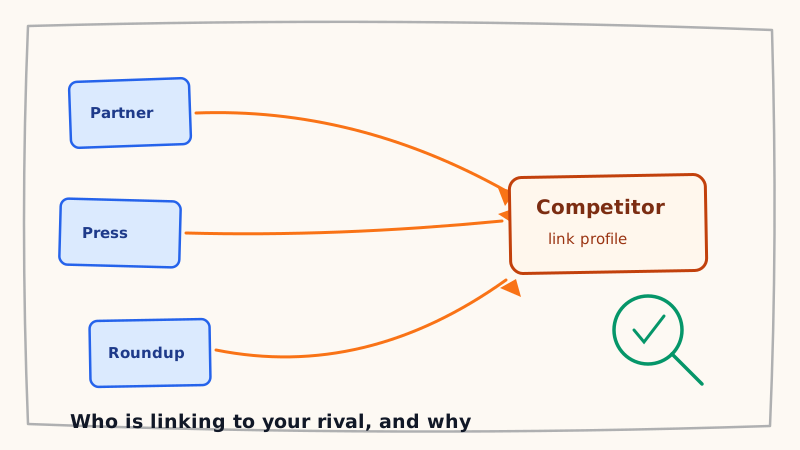
A backlink is the one competitive signal your rival cannot generate alone. A blog post, a pricing change, a new landing page: all of those a competitor controls end to end. A backlink requires someone else to decide they are worth linking to. That outside decision is exactly what makes the link profile such an honest map of who is betting on your competitor and why.
Most teams treat backlinks as an SEO housekeeping metric, a number to grow for their own domain and ignore for everyone else’s. That misses the real value. The links a competitor earns each month are a running feed of their partnerships, their PR wins, their guest-post campaigns, and the content bets that are actually landing. Read in sequence, that feed tells you what they are building before the announcement and where they are getting traction before their reps show up in your pipeline.
The snapshot is not the signal. A competitor’s total backlink count tells you almost nothing. The new links they picked up this week, and who chose to give them, is where the intelligence lives.
Why a backlink is harder to fake than anything on their own site
A company can publish whatever it wants on its own domain. It can announce a partnership that quietly dies, put a feature on a roadmap it never ships, or write a vision post with zero budget behind it. All of that is cheap because no third party had to agree.
A backlink is different. When an industry publication, a partner, an integration directory, or a customer links to your competitor, someone outside their marketing team made a call. That call cost them editorial credibility, a slot in their resource page, or a mention in their own content. People do not spend that lightly. So when the links start arriving, they confirm that something real happened: a deal closed, a story got picked up, a campaign found a channel that works.
This is also why backlink monitoring is a leading indicator rather than a lagging one. A partnership shows up as a link on the partner’s site days or weeks before the formal press release. A new integration appears in a marketplace listing before the competitor markets it. A content campaign starts earning links the moment it lands its first placement, long before it ranks. If you are watching the link profile, you are reading the strategy at the moment it goes live instead of at the quarterly review. Pairing that with the buying-intent signals covered in competitor signals in early sales cycles gives you both what they are building and who is already in the market for it.
What each type of new backlink actually tells you
Not all links carry the same meaning. The domain doing the linking is most of the message, and sorting new links by source is how you turn a raw list into a read on strategy.
- Partner and integration sites. A new link from another vendor’s site, especially on a partners or integrations page, almost always means a deal was signed. This is the earliest public trace of a competitor’s ecosystem strategy, and it names the exact companies they are aligning with. That maps directly to the ecosystem reads in monitor competitor integrations and partnerships.
- Press and media placements. Links from news sites, trade publications, or industry blogs signal a funded PR push or a story that got traction on its own. A cluster of media links in a short window usually means a launch, a funding round, or a hire big enough to pitch. The angle those outlets used is the positioning the competitor is leaning into right now.
- Guest posts and bylined content. When a competitor’s team starts appearing as authors on other sites, they have launched a thought-leadership campaign and are spending real time on it. The topics they choose to write about elsewhere reveal the narrative they want to own, and often the keyword clusters they are targeting next.
- Resource pages and “best tools” roundups. Getting added to a “top 10 tools” list or a curated resource page is a distribution win that compounds. Each new roundup placement is a channel sending them qualified traffic, and it tells you which communities and editors see them as a serious option.
- Customer and case-study links. A link from a customer’s blog or an “as featured in” logo wall confirms a live, referenceable account. Those are the logos their sales team is using in deals, surfaced publicly before you would ever hear about them in a call.
One new link is noise. A run of partner links, a media cluster, and three fresh roundup placements in the same two weeks is a funded, coordinated push you can plan a response to.
Where to watch, and what to actually track
You do not need enterprise SEO software to run this. The point is not a vanity dashboard of domain authority. The point is a short, reliable feed of what changed in a competitor’s link profile and who caused it.
Focus your monitoring on the sources that carry strategic meaning:
- The competitor’s own partners, integrations, and customers pages. These change when a new relationship goes live, and they are the fastest confirmation of a deal.
- New referring domains. A domain that never linked to them before and now does is worth a look, especially if it is a partner, a publication, or a directory in your space.
- Anchor text shifts. When the words people use to link to a competitor start clustering around a new product name or use case, the market is beginning to associate them with something new.
- Directory and marketplace listings. App stores, integration marketplaces, and category directories are where partnerships and new products surface first.
The failure mode is doing this by hand. Checking a competitor’s partners page or running a link report once a quarter guarantees you catch the change months late, usually after a customer mentions it. The links arrive continuously, so the watching has to be continuous too. A monitoring tool like CAM watches the pages and profiles that matter and alerts you the moment a new referring domain, partner listing, or media placement appears, so the signal reaches you while it is still early instead of during a lost-deal review.
Turning a new link into a decision
A backlink alert is only useful if it changes what someone does. Route each type of signal to the person who can act on it.
Sales and competitive teams should treat a wave of new partner or customer links as a heads-up that the competitor is getting stronger in a specific segment. If the linking domains cluster around a vertical or company size, that is where their reps are about to get more aggressive, and where your battlecards need a refresh. Feed that straight into the process in build a competitor battlecard from monitoring data.
Marketing and content teams should mine the competitor’s new links for their own channels. Every publication, roundup, and resource page linking to a competitor is a placement you can pitch too. A guest-post campaign you spot early tells you which narrative to counter and which editors are open to your category. The link profile is a pre-qualified outreach list hiding in plain sight.
Partnerships teams get the clearest signal of all. A competitor’s new integration link is a map of the ecosystem they are building, and often a list of partners you should be talking to before the relationship becomes exclusive.
The discipline that separates useful monitoring from noise is the same one that runs through every other signal: watch the change, not the snapshot, and put each change in front of the person who owns the response. Backlinks are simply one of the most trustworthy changes you can watch, because your competitor never gets to write them alone. Set up the alerts once with CAM, and the record of who is betting on your rivals arrives on its own, early enough to matter.
Ready to see competitor activity?
See which accounts your competitors are targeting on LinkedIn before you cold-call them.
Book a Walkthrough