
Monitor Competitor Affiliate and Partner Programs to Map Their Channel Strategy
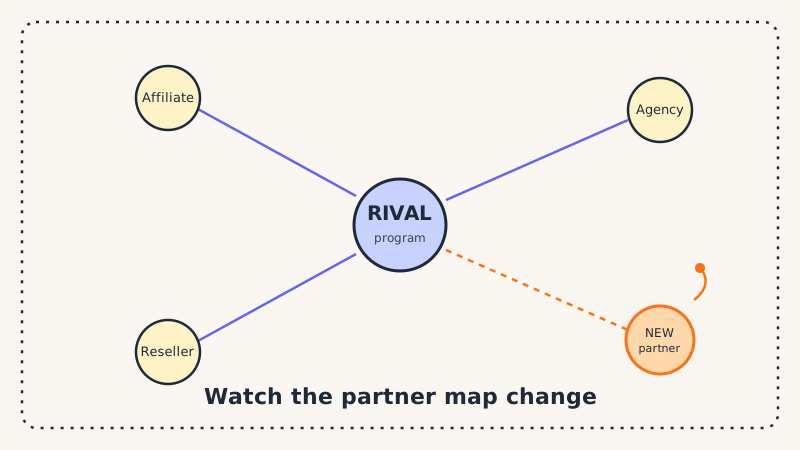
Most teams watch a competitor’s product and pricing obsessively and ignore the part of the business that quietly decides who wins the next hundred deals: the channel. Affiliates, resellers, agencies, and technology partners are the people selling on a competitor’s behalf, and every one of those relationships is documented on a public page the competitor updates themselves.
A partner directory is a confession. It lists who is committed to a competitor, which verticals they are pushing into, and what incentives they are dangling to recruit more sellers. When that page changes, the competitor is telling you their go-to-market is shifting, often months before you would feel it in a lost deal.
Almost nobody monitors this. That is the opportunity.
Why the partner page is an underrated intelligence source
Product pages get watched to death. Pricing pages get screenshotted the day they change. But the partner and affiliate program pages sit off to the side, updated less often and read by almost no competitor, which is exactly why they carry uncontested signal.
The channel is also a leading indicator of strategy, not a lagging one. A company decides to go after mid-market through resellers, then it builds a partner program to do it, then eventually the reps show up in your deals. If you catch the program change, you are reading the decision at the source instead of discovering it in a competitive loss six months later.
There is a second reason this matters: partners are poachable. A competitor’s affiliate or agency partner is, by definition, a company that already sells software in your category and already has the audience. When you can see who those partners are and when new ones appear, you have a pre-qualified recruiting list for your own channel.
What to watch, and what each change tells you
A partner or affiliate program is really a cluster of public pages, and each one signals something different.
- The partner directory or “find a partner” page. This is the master list. New logos appearing means the competitor is winning channel commitments. Logos disappearing can signal a partner defecting or a program being deprioritized. A directory that suddenly gets filtering by industry or region tells you the program is maturing and scaling.
- The “become a partner” or affiliate signup page. Watch the terms. A jump in commission rate, a new recurring-revenue share, or a lowered qualification bar means the competitor is spending money to recruit sellers aggressively. That is a demand-gen decision you can counter.
- Partner tier names and requirements. When a company introduces Gold, Platinum, or “Elite” tiers, it is professionalizing the channel and rewarding volume. New tiers usually precede a bigger channel push.
- New program types. The launch of a separate agency program, a technology or integration partner track, or an affiliate program where none existed is a strategic expansion. It tells you the competitor is chasing a new motion (partner-led, ecosystem-led, or creator-led).
- Featured verticals and use cases. Partner pages often name the industries a program targets. A new vertical appearing there frequently shows up before the competitor’s own marketing site catches up.
The interpretation is the value. A single new partner logo is a data point. A new tier, a higher commission, and three new agency logos in the same month is a channel offensive.
Where these signals live
The core sources are all public and self-hosted by the competitor, which makes them stable and easy to watch.
- The competitor’s own partner and affiliate pages (usually under
/partners,/affiliates,/agencies, or a subdomain likepartners.competitor.com). These are the primary sources. - Affiliate network listings. If a competitor runs their affiliate program through a network such as PartnerStack, Impact, or a similar platform, the public program listing shows commission structure and sometimes recruiting activity.
- Marketplace and directory partner tabs. App marketplaces and integration directories list technology partners, which overlaps with how you would already monitor competitor integrations and partnerships to detect ecosystem strategy.
- Partner announcement posts. New marquee partnerships often get a blog post or press mention, which pairs well with the newsroom signals you may already track.
The problem is never access. It is that these pages change quietly and on nobody’s schedule, so a manual check finds either nothing or a change that happened three weeks ago and is already stale.
Automate the watch so a channel move never surprises you
Partner pages are close to the ideal target for automated change detection: they are public, they are relatively static between updates, and the update is the whole signal. That combination is wasted on manual checking and perfect for monitoring.
The approach mirrors any change-detection problem. Point a monitor at each competitor’s partner directory, affiliate signup page, and program terms, and get alerted the moment the page changes. A tool like CAM checks each of these pages on an interval you set and notifies you when a new partner logo, a revised commission, or a brand new program track appears, so the change reaches you within hours instead of surfacing weeks later in a deal review.
A few principles keep the signal clean:
- Monitor the directory listing page, not one partner’s profile. You cannot bookmark a partner that has not been added yet. Watch the page that will contain them.
- Set up a separate watch per competitor and per page type. A change on the affiliate terms page means something different from a change on the partner directory. Separate monitors make the signal legible at a glance.
- Filter out cosmetic churn. Partner directories often reorder logos, rotate featured partners, or shuffle counts without any real new relationship. Good change detection ignores that noise and only fires on a genuinely new record, which is the same noise filtering that separates useful competitor website change tracking from a stream of false alarms.
- Watch the affiliate network listing too. If the program runs on a third-party network, the commission and cookie terms live there, not on the competitor’s own site.
Turning a partner signal into a sales and channel advantage
An alert only matters if it changes what someone does. Here is how the best teams convert a partner-page change into action.
For your own channel team. A new partner logo on a competitor’s page is a company that already sells in your category and already builds pipeline in your space. That is the warmest possible recruiting target. Reaching out to a freshly signed partner (or one you can offer better economics than the competitor just published) is a fast, specific play, and it is exactly where a personalized outreach channel like Kali earns its keep: you book the conversation while the partner is still evaluating whether the competitor’s program is worth their attention.
For sales. When a competitor raises affiliate commissions or launches an agency program, your reps should expect more competitive pressure through those partners in the coming quarters. Brief the team early, prepare the counter-positioning, and get ahead of the accounts those partners are most likely to influence.
For strategy and marketing. A new vertical featured on a partner page is an early read on where the competitor is aiming next. That is lead time to decide whether to defend the segment, accelerate your own partner motion, or let them have it. Pairing the partner signal with related moves, the way you would when you track competitor hiring patterns to predict strategic shifts, turns a single page change into a confident timeline.
Start watching before the next channel move lands in your pipeline
The reason partner monitoring works is the same reason so few teams bother: the payoff is quiet and delayed. A new agency partner added today might not cost you a deal until next quarter. But when that deal shows up, you want to be the team that saw the channel shift coming and already recruited the best partners for yourself.
Set up the watch while it is quiet. Point automated monitoring at each top competitor’s partner directory, affiliate signup page, and program terms, keep the interval tight for the rivals you meet most in deals, and let the alerts come to you. Stand up your partner-page monitors on CAM and turn a page your competitors forget to hide into a private map of their channel strategy.
Ready to see competitor activity?
See which accounts your competitors are targeting on LinkedIn before you cold-call them.
Book a Walkthrough